
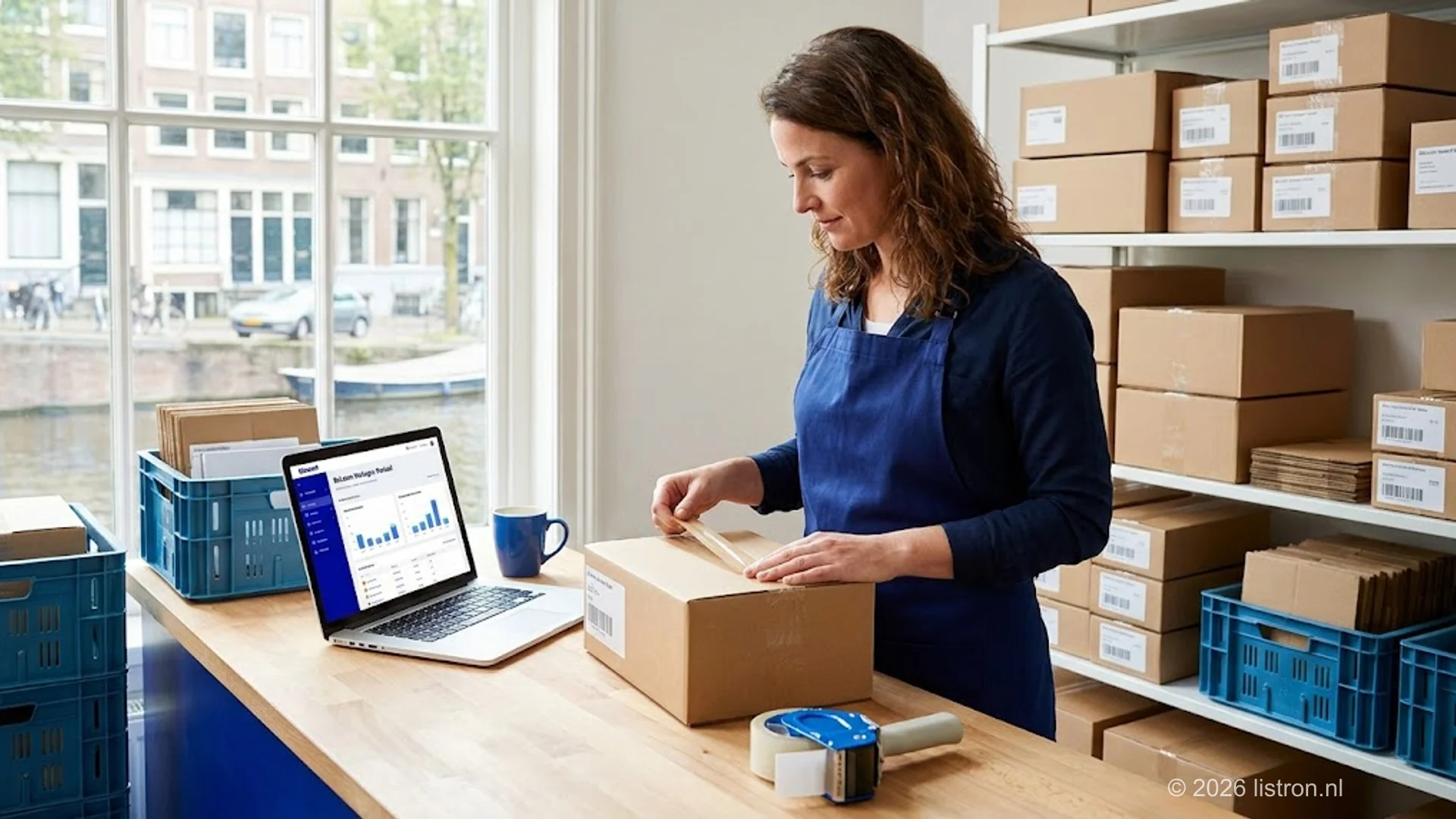
Why bol.com matters for sellers
For anyone selling online in the Netherlands and Belgium, bol.com is not just a marketplace. It is the marketplace. With millions of active customers, it is the largest sales platform in the Benelux, and for many shoppers the first place they search for a product.
That makes bol.com a logical choice when you want to grow your reach. You tap directly into a huge, purchase-ready audience without having to drive traffic to a webshop yourself. The trade-off is competition: you stand alongside thousands of other sellers, often on exactly the same product.
Success on bol.com is therefore not about 'being on it', but about doing it well. A correctly set-up account, optimized listings, a smart logistics choice and a sharp price that wins the buy block. This guide walks through every step.
bol.com is also a natural starting point for a broader multichannel selling strategy. For most Dutch sellers it is channel number one, with Amazon.nl as the logical second.
bol.com in brief
bol.com is the largest online marketplace in the Netherlands and Belgium. It serves a broad assortment, from electronics and home to toys and books. Sellers can ship themselves or outsource fulfillment via Logistics by bol (LVB).
Setting up a seller account
Selling on bol.com starts with a business seller account. The basics you need are straightforward: a registered business with a Chamber of Commerce registration (or foreign equivalent) and a VAT number, a business bank account for payouts, and contact and return details that are correct and reachable.
After registration you go through a verification process. Once your account is active, you can add your first products.
Linking products to the catalog
bol.com works with a shared product catalog. If a product already exists, identifiable by the EAN, you place your offer under the existing product page. If the product is new, you create a product page yourself with complete content.
Every product needs a valid EAN or GTIN. Without a unique product identifier you simply cannot offer it. Make sure that data is in order before you start.
Start small
Don't launch your entire catalog at once. Begin with a handful of bestsellers and learn how the platform works: the content, the shipping, the customer contact. Then expand in a controlled way.
Logistics by bol or ship yourself?
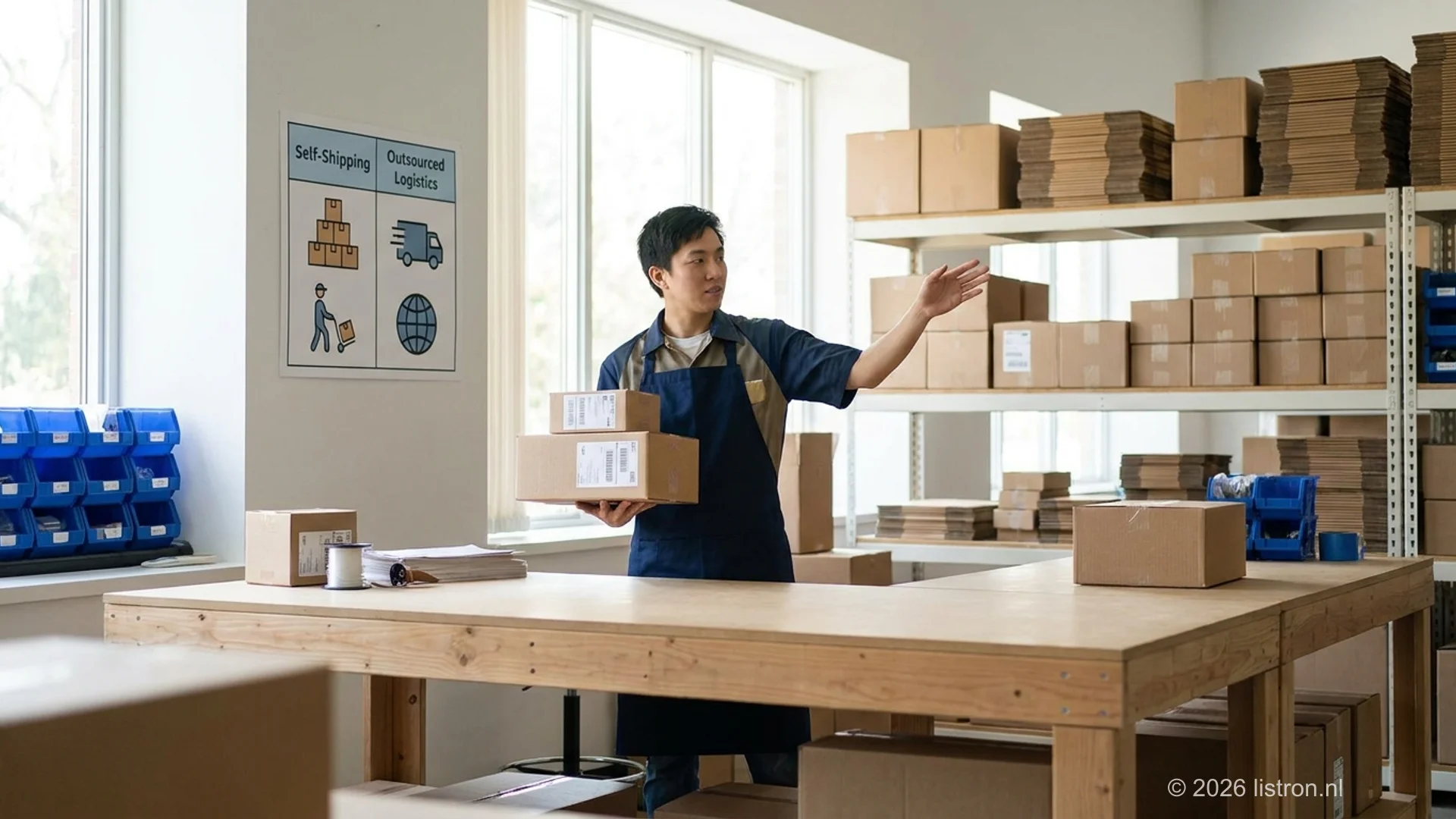
One of the most important choices when selling on bol.com is your fulfillment model. There are two main options.
Shipping yourself
You keep stock under your own management and ship orders yourself. You have full control over packaging and shipping costs, but you are also responsible for meeting the delivery times and service levels bol.com expects. For sellers with their own warehouse and good processes, this works fine.
Logistics by bol (LVB)
You send your stock to bol.com's warehouses, and they handle storage, shipping, returns and part of customer service. The advantage is fast delivery, often a better position in the buy block, and less operational burden. Against that, you pay storage and fulfillment costs and give up a degree of control.
Many sellers choose a hybrid approach: fast movers via LVB for speed and buy-block advantage, slow-selling or large products self-managed. Which mix works best depends on your margins, your product type and your own logistics capacity.
Whatever you choose, your inventory must stay synchronized in real time with your other channels. Otherwise overselling occurs.
Optimizing your listings for bol.com
On bol.com you often compete on exactly the same product as other sellers. Strong listings determine whether customers, and the algorithm, choose you.
Dutch-language, complete content
bol.com serves a Dutch-language audience and expects content in Dutch. A clear, descriptive title, a complete product description and filled-in specifications are the basis. The more complete your product data, the more often you appear in filters and search results.
High-quality images
Good product photos sell. Use sharp images, multiple angles and meet bol.com's image requirements. On a shared product page, strong visuals contribute to the whole page, and therefore to your offer.
Complete attributes
Fill in all relevant product properties: dimensions, color, material, brand, category. Attributes feed the filters buyers search with. A half-empty attribute list costs you visibility.
Delivery time and stock
bol.com values reliability. A realistic delivery time and an accurate stock count prevent cancellations and protect your seller rating. An overly optimistic delivery time you don't meet harms your position more than an honest, slightly longer one.
Winning the buy block
When multiple sellers offer the same product, bol.com shows one offer prominently in the buy block. That is where most sales come from, so winning the buy block is a direct revenue driver.
The buy block is awarded based on a combination of factors. Price weighs heavily: it is about a competitive total price including shipping costs. Delivery time and reliability count, and fast, predictable delivery helps; that is one reason LVB offers often have an advantage. Your seller performance plays a role too, such as your service level, your cancellation rate and your customer satisfaction. And a product that is in stock and immediately deliverable stands a better chance than one with a long delivery time.
You don't have to be the cheapest to win the buy block, but your price must be competitive combined with strong performance. Manually adjusting your price based on the competition is time-consuming and error-prone. That is where automated marketplace repricing comes in: rules that adjust your price in real time to stay competitive without sacrificing your margin.
Buy-block rule of thumb
Winning the buy block is not a race to the bottom. Set a floor price that protects your margin and let a repricer compete within that limit. Strong seller performance and fast delivery often compensate for a price that isn't the absolute lowest.
Costs and commissions on bol.com
Selling on bol.com is not free, and your margin per sale depends on a few cost items. Calculate them through before you set your prices.
The most important is the sales commission. bol.com charges a commission per sale consisting of a fixed amount plus a percentage, and both vary by product category. If you use Logistics by bol, storage and fulfillment costs are added, depending on product dimensions and storage duration. Also factor in any subscription costs for the sales account. And don't forget returns: return shipments bring costs and lost revenue, so include a realistic return rate in your calculation.
Commission rates differ greatly per category, so always check bol.com's current fee schedule for your products. What it comes down to: calculate your actual net margin per product after all costs. A product that looks profitable on gross price may, after commission, fulfillment and returns, still be loss-making.
This per-channel margin analysis is also exactly why you use different prices on different marketplaces. There is more on that in our guide to multichannel selling.
Automate your selling on bol.com
Listron connects your product catalog to bol.com and your other channels, with real-time inventory sync, automated repricing for the buy block and streamlined order processing.
Request a demoAutomating your bol.com selling
As long as you sell a handful of products on bol.com alone, the standard seller dashboard is enough. The moment your catalog grows or you combine bol.com with other channels, automation becomes necessary.
A marketplace integrator connects your central product catalog to bol.com and takes over the work that would otherwise be manual. Listings are created and updated in the bol.com format, straight from your master data. Inventory stays synchronized in real time between bol.com and every other channel, so overselling is prevented. Automated repricing adjusts your price within your own rules to win the buy block. And order processing brings bol.com orders, cancellations and returns together with those of your other channels.
The result: you manage bol.com not as a separate silo, but as one channel within an automated operation. Listron integrates with bol.com and keeps the connection current when bol.com changes its API or rules. To find which platform fits you, read our overview of the best marketplace integrators.
Common mistakes when selling on bol.com
New bol.com sellers often run into the same problems. Know them in advance.
Incomplete or English-language content
Copying content from an international source, or filling fields in halfway, costs you visibility and can lead to rejected offers. Write complete, Dutch-language content.
Overly optimistic delivery times
Promising a delivery time you don't structurally meet leads to cancellations and a lower seller rating. Be honest. Reliability weighs more than speed on paper.
Not calculating margin
Selling without accounting for commission, LVB costs and returns is selling without knowing whether you make a profit. Calculate your net margin per product.
Not synchronizing inventory
If you also sell on other channels, your bol.com stock must move in real time. Without sync, overselling is a matter of time.
Tracking the price manually
Competitor prices move continuously. Manual adjustment is unsustainable. Use automated repricing with a floor price.
Getting started on bol.com
For Dutch and Belgian sellers, bol.com is one of the most direct ways to grow your reach. The route to success is no secret. It is simply a matter of careful execution.
A workable sequence looks like this:
- Set up your seller account with correct business and return details.
- Get your product data in order: valid EANs, complete Dutch-language content, good images.
- Choose your logistics model, whether that is shipping yourself, LVB or a hybrid mix.
- Launch with your bestsellers and learn how the platform behaves.
- Set up repricing and inventory sync once you scale up or add more channels.
- Measure and adjust. Track your buy-block share, your margin and your seller performance.
Once bol.com runs smoothly, it is the logical base to expand to Amazon.nl and beyond. With automation in place, every new channel becomes an extra integration, not a new manual process.
Ready to professionalize your bol.com selling? Schedule a demo with Listron and see how to automate listings, inventory and prices.